
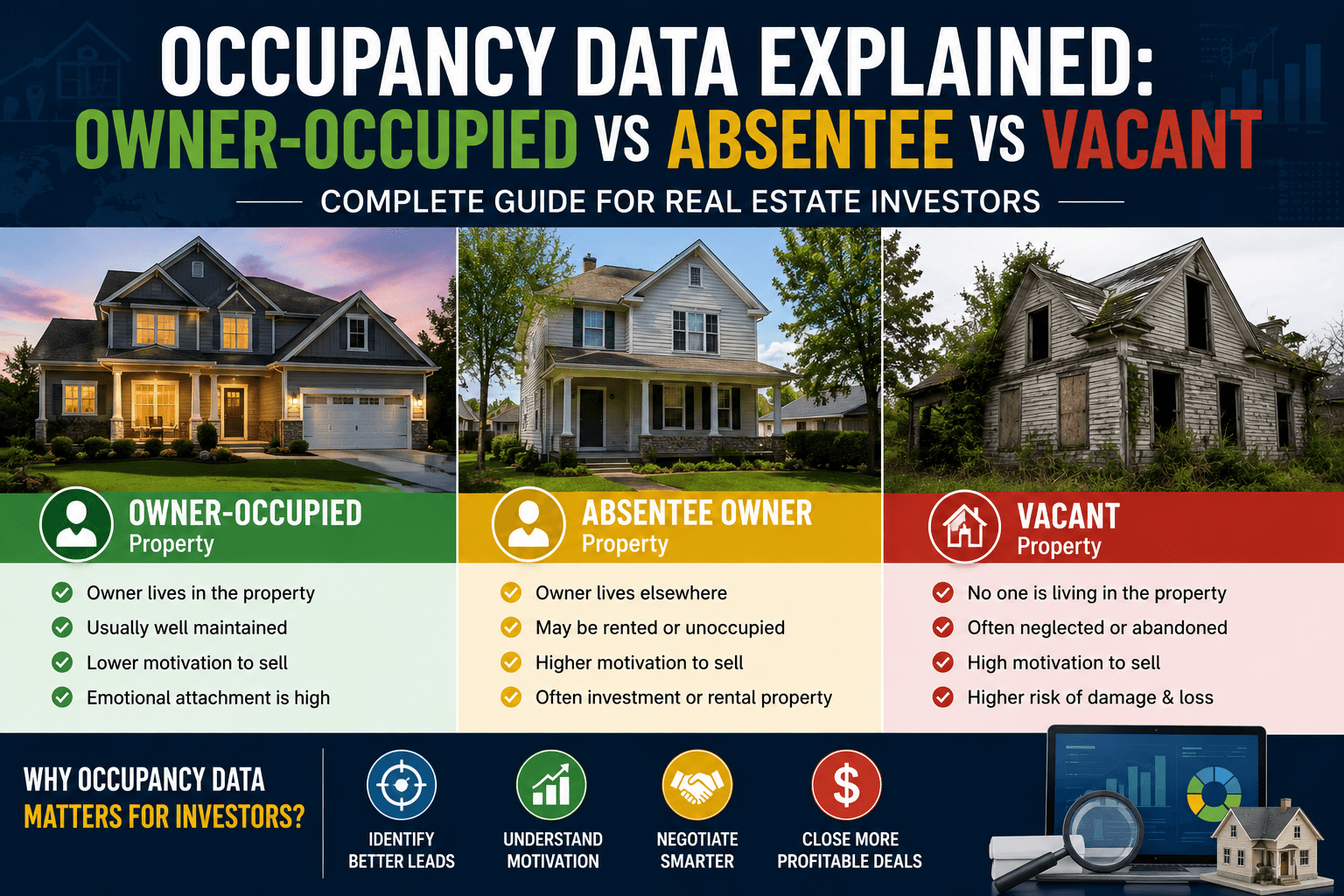
Most folks overlook it, yet knowing who stays in buildings shapes smart property choices. When spaces sit empty, that truth points straight to the seller's next move.
Simply put, occupancy data tackles this one main query:
“Is this property lived in by the owner, a tenant, or is it empty?”
This changes how sellers act, what price they pick, yet shapes the way properties get promoted. What matters most shows up in urgency, numbers, then where ads appear.
Picture a quiet street where homes sit empty, unnoticed. That silence holds numbers someone is already watching closely. Not every figure tells the full story at first glance. Some patterns only show up when rent records meet building permits. Investors peek behind closed doors without stepping inside. Empty units speak louder than ads ever do. Hidden moves start with knowing who isn’t there. A single address can spark a chain of decisions miles away. This walk through raw details skips the noise most repeat. What counts isn’t always counted right away.
Some homes sit empty while others have people inside - that detail makes up occupancy data. Homes get sorted by who lives there, or if nobody does. A place might be lived in full time. Sometimes it stands quiet, unused for now. This info tracks exactly that difference. Each building falls into one clear group
This information gets picked up by:
Most of the time, occupancy figures get paired up with different kinds of information such as
Out of this mix comes a list packed with likely leads. Each piece fits together like parts of a puzzle meant for one picture only.
Most of the time, people sort occupancy information into one of three types
Inside these walls, life unfolds where toothbrushes carry familiar names. What makes a place home isn’t just documents tucked in drawers - it’s how evenings settle there, food gets shared, habits form slowly. Bricks change meaning once someone starts leaving shoes just past the entrance. A date on a lease won’t do it; only time lived does. Each step across the floor adds weight beyond what any contract can claim. Paper says one thing, bodies living there say another.
Most people who live in their own homes rarely respond well to direct mail campaigns. Unless something's gone wrong - like unpaid taxes, a split with a spouse, or money troubles - they tend to stay put. Hardship often shifts that pattern. Without pressure, they ignore offers. Stability keeps them from selling. A crisis can change everything. Otherwise silence follows every pitch.
Yet possibilities remain when:
A home stands unused when its owner lives elsewhere - that’s what makes it absentee-owned. Faraway properties sometimes belong to folks who never step inside them. One individual holds the title, yet the building either empties out or hosts renters instead. In urban spots, buyers pick up units just to hold or lease, not live. The gap between owner and structure stretches across states, even time zones.
On the flip side, ownership could look like this:
Absentee owners are one of the highest-value targets in real estate investing because:
A space without people inside it counts as a vacant property. These places sit empty, no one living there at all.
Vacant homes often signal:
Vacant properties are often the fastest path to discounted deals because:
Most times, you won’t get occupancy stated outright. It shows up by piecing together clues from different records.
Should the tax bill go someplace else than where the house sits, it probably means nobody lives there. That gap between addresses often points to an owner who does not stay on site.
Whether the owner still lives there becomes clear here. Here, it turns out if they’ve left the home behind.
When lights stay off, taps run dry, meters barely move - signs point to an empty home. Quiet utilities often mean no one is living there. Pipes silent, switches untouched - the house sits still. Power bills drop when nobody comes near. Empty rooms leave traces in unused energy. A meter that sleeps too long tells its own story.
Combining tax delinquency + ownership patterns helps identify distress.
Visual confirmation of:
What fills a space shapes choices. Not merely labeling who's where, it guides actions. Seeing patterns becomes strategy. Empty chairs speak as loud as full ones. How rooms breathe matters more than names on doors. Numbers turn into next steps. Where people gather shifts how plans form.
Investors prioritize:
Different occupancy types require different messaging:
Especially for absentee and vacant properties, investors use skip tracing to find:
Best results come from combining datasets:
Owner-occupied and vacant leads require completely different strategies.
Some new investors look just at empty houses, yet overlook solid landlords renting well-maintained properties.
Finding poor prospects takes up your hours when nothing blocks them out.
Fast responses shape outcomes in property markets. Getting there first makes the difference.
To maximize results, follow this system:
Divide leads into:
Combine occupancy with:
Use:
Top priority:
A strong clue hides in occupancy numbers, showing whether a landlord pays close attention - or stays out of touch. When tenants come and go too often, it might mean the owner ignores upkeep. Full buildings can signal hands-on management, while empty units may point to neglect. Real patterns emerge only after looking past surface figures. The way space gets used tells more than rent prices ever do.
Occupancy details start pulling more weight when mixed with overdue tax records or signs of financial stress. That mix quietly fuels opportunities beyond the public market.
Most folks miss them entirely - yet spotting eager sellers early comes down to knowing exactly where to look. A little timing turns quiet opportunities into clear wins.